
By Shruthila Narendra
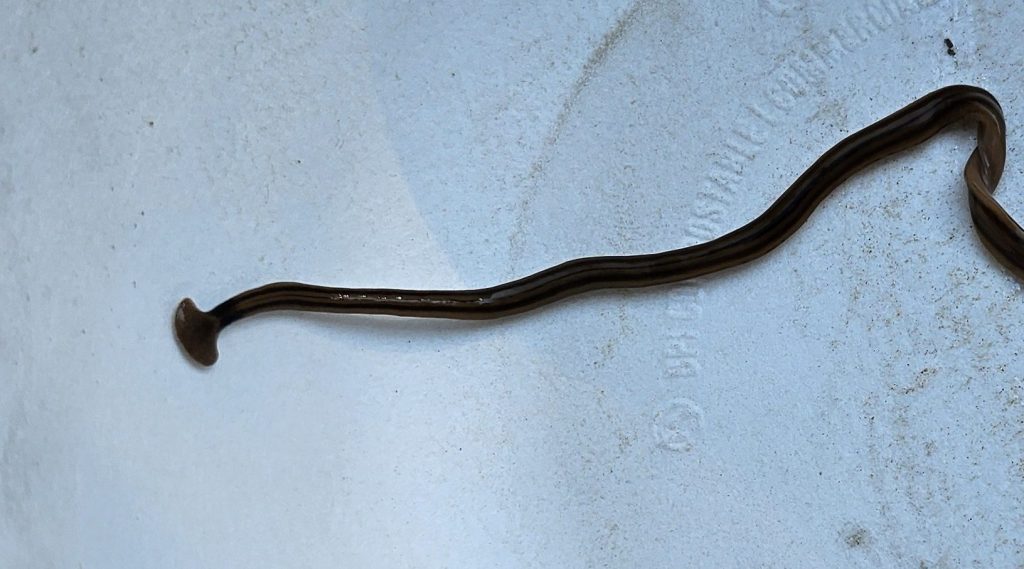
In recent years, an alarming invasive species has been showing up in gardens and yards across the U.S.: the hammerhead worm (genus Bipalium). While these slimy creatures may look harmless at first glance, they pose a serious risk to pets, especially dogs and cats who love to sniff, lick, or even eat anything that moves in the grass
What Are Hammerhead Worms?
Hammerhead worms are flatworms with a distinctive hammer-shaped head, native to Southeast Asia but now found in many parts of the U.S., especially in warm, moist climates. These worms are predatory and feed on earthworms, which can disrupt soil health and the ecosystem [1].
They’re most commonly seen after rain, slithering across patios or garden beds — and they leave behind mucus that may carry toxins.
Why Are They Dangerous to Pets?
The danger lies in what hammerhead worms produce and secrete: a potent neurotoxin called tetrodotoxin. This is the same deadly compound found in pufferfish. While a single worm may not contain enough toxin to harm a human, *it can be dangerous to smaller animals like dogs and cats, especially if ingested [2].
Symptoms of exposure or ingestion may include:
- Vomiting
- Diarrhea
- Excessive drooling
- Lethargy or weakness
- Disorientation or neurological symptoms
Veterinary research suggests even minimal ingestion could result in digestive upset or worse, especially in smaller or sensitive pets [3].
The Regeneration Problem
What makes hammerhead worms even more troubling is their incredible ability to regenerate. If you cut or crush one, it doesn’t die — it multiplies. A single fragment can regrow into a whole new worm [4]. This makes killing them difficult without the right method.
How to Safely Kill a Hammerhead Worm?
To eliminate one safely and effectively, you must:
- Pick it up with gloves or a paper towel (never bare hands)
- Place it in a sealed plastic bag
- Pour in salt, vinegar, rubbing alcohol, or citrus oil
- Dispose of the sealed bag in the trash
Do not flush it, and do not cut or crush it directly on the ground. Their mucus can stick to your pet’s paws and fur — which is why it’s essential to wash your pet thoroughly if contact occurs.
What Pet Parents Should Do?
- Check your pets when they come in from the yard — especially after it rains.
- Train pets to avoid eating random bugs or worms.
- Keep an eye on damp areas in your yard where worms may hide.
- If your pet shows symptoms after being outdoors, contact your vet immediately.
Scientific References
- Justine, J. L., et al. (2018). “Giant hammerhead flatworms invading French gardens are new alien species.” PeerJ, https://doi.org/10.7717/peerj.4672
- Winsor, L. (1998). “A review of the morphology of land planarians.” Pedobiologia, 42(5-6), 441–451.
- McClure, D. (2022). “Tetrodotoxin production and its ecological role in terrestrial flatworms.” Toxicon, 206, 105–113.
- Fernández-Álvarez, F. A., et al. (2019). “Regeneration in land planarians: mechanisms and implications.” Frontiers in Zoology, https://doi.org/10.1186/s12983-019-0311-3
Final Thoughts
Hammerhead worms may seem like a small nuisance, but their toxic nature and regenerative abilities make them a serious threat — not only to the environment, but also to our pets. As a pet parent, staying informed and alert can make all the difference in keeping your furry family safe.
 SHIVA FOUNDATION